












How to Make Leaf Mould: The Essential Autumn Guide for Gardeners
-
 Mon - Fri 8.30am -
5.00pm
- Sat 8.30am - 5.00pm
- Sun 9.30am - 4.00pm (Tills open 10am)
As autumn arrives and the trees begin to shed their leaves, the garden offers one of its most valuable free resources — fallen foliage. Instead of sending leaves to green waste, you can turn them into leaf mould, a rich, crumbly soil conditioner that improves structure, moisture retention and overall plant health. Autumn is the perfect time to start, with plenty of fresh leaves available and cool, damp weather helping the decomposition process along. Collecting and storing them now means you’ll have beautifully matured leaf mould ready to use next year, giving your beds, borders and containers a natural boost.
Collecting the leaves
Leaves are collected in the autumn as they fall from the trees. Any leaves can be used, but it is worth bearing in mind that different types of leaves break down over different periods of time. The leaves of oak, beech or hornbeam break down easily and produce the best quality leaf mould.
Thicker leaves such as walnut, sycamore and chestnut are much slower to break down and require shredding before adding to the leaf pile. They can also be added to the compost heap once shredded. Evergreens should also be shredded and added to the compost heap for best results.
Leaves can be collected from public places as well as your own garden, but remember that if leaves are collected by main roads they could be affected by atmospheric pollution. Try to collect the leaves when the weather is dry and still as this will make the job much easier. When collecting leaves from the lawn a rotary mower can be used to shred them. This method will add grass clippings which increases the nutrient value and the shredded leaves will also rot down more quickly.

Making the leaf mould
One of the simplest ways to make the leaf mould is to put the leaves in bin liners. If the leaves are dry they will need to be moistened. Pierce holes in the bags, tie them up loosely and stack them in a suitable place and wait while they work their magic. This process usually takes up to two years. If you prefer not to have your leaves in bags it is fairly easy to construct a container to put them in using chicken wire or similar and some stakes. The container can be round or square supported either at intervals around a circle or at the corners for a square. Place your bags or container in a sheltered position in the garden to prevent the leaves blowing away.
Note: The leaf mould should not be allowed to dry out and should be moistened if necessary. Leaf mould that is slow to break down can be turned regularly. This will aerate the leaves and speed up the process.

Using the leaf mould
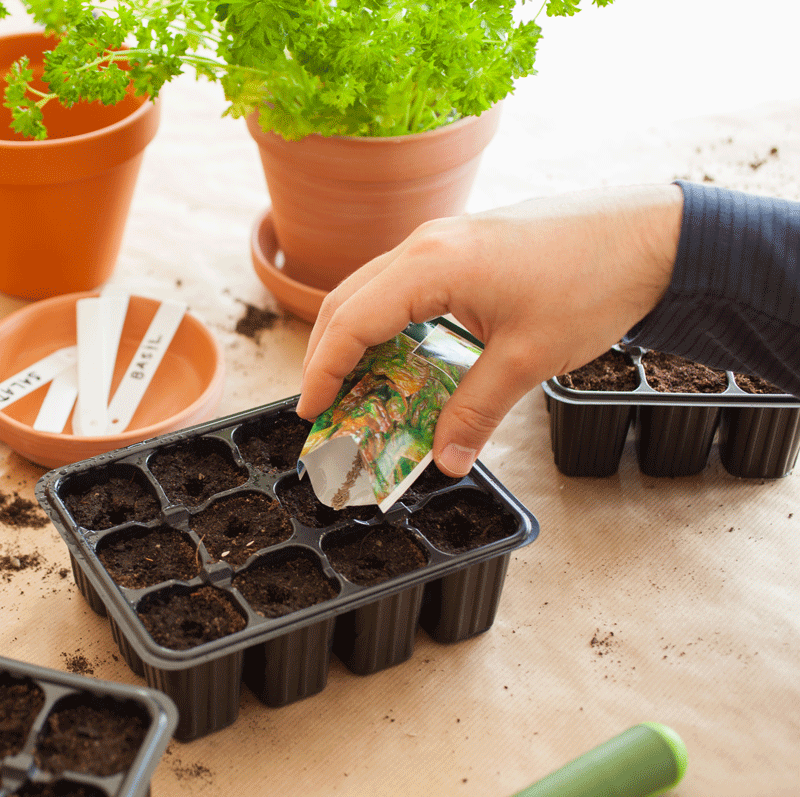
If the leaf mould is well-rotted (over two years old) the quality will good and it can be used as a seed sowing compost. It can also be mixed with equal parts sharp sand, garden compost and good quality soil and used as a potting compost.
Leaf mould that is less than two years old can be used as a garden mulch, soil improver, lawn top-dressing or to cover bare soil for the winter.
The image below is of one year old leaf mould being used to mulch a woodland garden.